








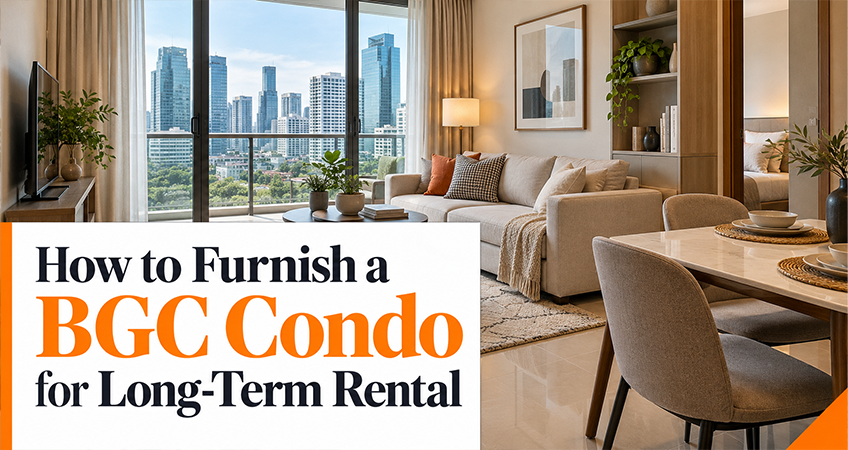
Furnishing a condo in Bonifacio Global City (BGC), Taguig, for long-term rental requires more than choosing attractive furniture. Property owners need to create a comfortable, functional, and easy-to-maintain living space that meets the needs of prospective tenants while keeping furnishing costs under control.
BGC attracts professionals, corporate employees, expatriates, and other residents who may be looking for convenient, move-in-ready accommodation. However, tenant preferences vary by building, unit size, budget, and lifestyle. A furnishing plan should therefore reflect the type of tenant you want to attract rather than rely on a one-size-fits-all design.
Whether you own a studio, a one-bedroom condo, or a larger residential unit, the right approach can help you prepare the property for leasing and manage ongoing maintenance more effectively.
In this guide, Kondo Ko explains how to furnish a BGC condo for long-term rental, from setting a realistic budget and selecting essential furniture to choosing durable materials and preparing the unit for tenant move-in.
What Is the Best Way to Furnish a BGC Condo for Long-Term Rental?
The best approach is to identify your target tenant, establish a furnishing budget, prioritize essential furniture and appliances, choose durable and easy-to-maintain materials, and prepare the condo for comfortable everyday living.
Before purchasing anything, review the unit’s size, layout, existing fixtures, building rules, and likely tenant requirements.
A practical furnishing plan should include:
- A functional furniture layout.
- Essential bedroom and living-room furniture.
- Kitchen appliances and basic household equipment, depending on the rental offering.
- Adequate storage and lighting.
- Durable finishes and easy-to-clean furnishings.
- A written inventory of items included in the rental.
- A final inspection and cleaning checklist.
The objective is to prepare a property that feels ready to live in without spending unnecessarily on features that may not increase its appeal to your intended tenants.
1. Understand Your Target Tenants in BGC
Before deciding on furniture, consider who is most likely to rent your condo. BGC has residential developments with different unit sizes, amenities, locations, and rental price points, so the ideal furnishing approach will depend on the property and its target market.
Young professionals and corporate tenants
Tenants who work in or near BGC may value a practical home that supports their daily routine. Prioritize a comfortable bed, functional wardrobe, reliable lighting, a dining or work surface, and convenient storage.
A dedicated work area can be useful for tenants who occasionally work from home. It does not necessarily need to be a separate room; a compact desk and a suitable chair may be enough if the layout allows it.
Expatriates and relocating professionals
Some tenants relocating to Metro Manila may prefer a condo that is ready for immediate occupancy. Depending on the agreed rental package, this can mean including major appliances, basic window treatments, bedroom furniture, and essential kitchen equipment.
Keep the design neutral and functional so that tenants can personalize the space with their own belongings.
Couples and small households
For couples or small households, prioritize storage, a comfortable dining area, practical kitchen space, and furniture that does not obstruct movement around the condo.
Kondo Ko tip: Start with the tenant’s likely daily needs. A well-planned layout and useful storage can be more valuable than adding decorative items that take up space.
2. Set a Furnishing Budget Before Buying Furniture
One of the most common mistakes in preparing a condo for rent is buying items individually without a complete budget. Small purchases can accumulate, and owners may overlook delivery, assembly, installation, and replacement costs.
Create a furnishing budget based on the condition of the unit and the level of furnishing you intend to offer.
Budget category | Items to consider |
Bedroom | Bed frame, mattress, pillows, wardrobe, bedside table |
Living room | Sofa, coffee table, side table, curtains or blinds |
Dining area | Dining table and chairs, or a compact dining solution |
Kitchen | Refrigerator, cooking equipment, and other agreed appliances |
Bathroom | Shower accessories, mirrors, storage, and essential fittings |
Lighting | Functional ceiling lights, task lighting, and replacement bulbs |
Storage | Shelving, organizers, and practical cabinets |
Delivery and installation | Transport, assembly, mounting, and related labor |
Final preparation | Cleaning, minor repairs, and replacement of defective items |
The final cost will depend on the unit’s size, the furniture selected, the condition of existing fixtures, and whether you need custom cabinetry or renovation work.
To control spending, classify purchases into three groups:
- Essential: Items required for the condo to function comfortably.
- Useful upgrades: Items that solve a specific layout or storage problem.
- Optional decoration: Accessories that can be added once the essentials are complete.
Request quotations for major purchases and confirm delivery, installation, warranties, and replacement policies before paying.
3. Choose Furniture That Fits the Condo Layout
BGC condos come in different sizes and configurations. Furniture that looks attractive in a showroom may be unsuitable for a compact unit once it is placed beside doors, kitchen counters, wardrobes, and walkways.
Measure the available space before ordering furniture. Check the dimensions of the furniture as well as the access routes through the building, including lifts, corridors, and doorways.
For studio condos
A studio needs careful space planning because the bedroom, living area, and sometimes the dining area share one room.
Consider:
- A bed frame with under-bed storage, where appropriate.
- A compact sofa or seating arrangement.
- A small dining table that can also serve as a work surface.
- A wardrobe that uses vertical space efficiently.
- Wall-mounted shelves where installation is permitted.
Keep the layout open and avoid buying oversized furniture that makes the room difficult to navigate.
For one-bedroom condos
A one-bedroom unit offers more separation between sleeping and living areas. Prioritize a comfortable bed, wardrobe, sofa, dining furniture, and useful kitchen storage.
If tenants may work from home, assess whether a small desk can fit without compromising the living area.
For two-bedroom condos
Consider how the second bedroom will be used. It may serve as a guest room, a child’s room, or a home office, depending on the target tenant.
Avoid automatically furnishing every room with the same setup. A layout that reflects the property’s likely use can make the unit more practical.
4. Prioritize Essential Furniture and Appliances
For a long-term rental, furnishings should support everyday living rather than simply make the condo look complete in photographs.
Bedroom essentials
The bedroom should offer a comfortable sleeping arrangement and enough storage for clothing and personal items.
Prioritize a suitable mattress, a stable bed frame, a wardrobe, and practical lighting. Select materials that are easy to clean and replace if damaged.
Living-room essentials
Choose a sofa that fits the room, a functional table, and lighting appropriate for relaxing or entertaining. Make sure the furniture arrangement allows tenants to move comfortably through the space.
A television may be appropriate for some rental offerings, but confirm whether your target tenants expect one before adding it to the budget.
Kitchen essentials
The kitchen should be usable and easy to maintain. Depending on the rental arrangement, this may include a refrigerator, cooking equipment, adequate storage, and appropriate lighting.
Check that appliances are compatible with the available electrical connections and that installation complies with building requirements.
Dining and work areas
A dining table can sometimes double as a work surface, especially in a studio or compact one-bedroom unit. Choose chairs that are comfortable for their intended use and do not obstruct walkways.
Before finalizing the furniture list, decide whether the property will be offered as fully furnished, partially furnished, or unfurnished with selected fixtures.
Clearly state what is included in the rental listing and lease agreement.
5. Choose Durable, Low-Maintenance Materials
Long-term tenants use the property as their everyday home, so furniture and finishes should be selected for regular use.
The most expensive materials are not necessarily the best choice. Focus on durability, maintenance requirements, availability of replacements, and suitability for the unit.
Item | Practical furnishing consideration |
Sofa | Choose upholstery that can be cleaned according to the manufacturer’s instructions |
Mattress | Select an appropriate quality level and use a suitable protective cover |
Dining furniture | Consider sturdy construction and surfaces that are easy to wipe clean |
Cabinetry | Check hardware quality, storage capacity, and repair options |
Flooring | Review existing condition, cleaning needs, and suitability for daily use |
Curtains or blinds | Choose a suitable window treatment that is easy to maintain |
Lighting | Use practical fixtures and confirm that replacement bulbs are available |
For rental properties, neutral finishes can make the space appealing to a wider range of tenants. This does not mean every condo needs to look identical. You can introduce character through a coordinated color palette, a few decorative details, and carefully selected lighting.
Avoid making expensive design decisions solely for visual impact if they create unnecessary maintenance or replacement costs.
6. Use Neutral Interior Design With a Clear Style
A cohesive design helps the condo feel organized and move-in ready. It also makes it easier to photograph the property for rental listings.
Consider a simple design direction, such as contemporary, minimalist, or warm modern interiors. Select a small number of complementary colors and repeat them through furniture, textiles, and accessories.
For example, a neutral sofa, practical wood-look finishes, coordinated curtains, and warm lighting can create a welcoming environment without requiring extensive decoration.
When planning the design:
- Keep the main furniture pieces consistent in style.
- Use color through removable accessories rather than too many permanent finishes.
- Avoid excessive decorative items that collect dust.
- Make sure lighting is adequate for daily activities.
- Keep window areas and walkways unobstructed.
If the unit requires custom furniture, cabinetry, or a more comprehensive redesign, professional condo interior design can help align the layout, materials, and furnishing choices with the property’s purpose.
See Kondo Ko’s interior design services in the Philippines for more information.
7. Maximize Storage Without Making the Space Feel Crowded
Storage is important in condos because tenants need somewhere to keep clothing, household supplies, work equipment, and personal belongings.
However, adding more cabinets is not always the answer. Poorly placed storage can reduce usable space and make a small condo feel cramped.
Start by identifying where storage is missing. Common areas include the bedroom, entryway, kitchen, and bathroom.
Practical options may include:
- Wardrobes with a combination of hanging and shelf space.
- Under-bed storage where it is convenient to access.
- Kitchen organizers that make use of existing cabinets.
- Compact shelving in suitable areas.
- Bathroom storage that does not interfere with ventilation or movement.
Measure carefully before installing built-in cabinets. Confirm whether drilling or other installation work is permitted by the condominium administration.
For smaller units, prioritize storage that solves a specific problem rather than filling every available wall.
8. Make the Condo Comfortable for Everyday Living
A furnished condo should be more than visually appealing. Tenants need a space that works throughout the day.
Review the unit from the perspective of someone who will live there for several months or longer.
Consider whether:
- The bed and sofa are comfortable for their intended use.
- The dining area is practical for meals.
- There is enough lighting for reading, cooking, and working.
- Curtains or blinds provide suitable privacy and light control.
- Kitchen and bathroom fixtures function properly.
- Storage is sufficient for ordinary belongings.
- The air-conditioning system, where installed, operates correctly.
- Furniture placement allows safe and convenient movement.
Also inspect the existing property before buying replacements. Functional built-in cabinets, appliances, lighting, and fixtures may not need to be replaced simply to match a new design.
Reusing suitable existing items can help keep the furnishing budget under control.
9. Prepare the Condo for Long-Term Rental Listings
Once furnishing is complete, prepare the property so prospective tenants can understand what they will receive.
Begin with a detailed inspection. Test the appliances included in the rental, check visible finishes, confirm that doors and cabinets work properly, and address any agreed repairs.
Next, prepare an inventory of the furnishings and appliances. Record their condition and, where useful, retain receipts, manuals, and warranty information.
Before listing the condo:
- Complete the final cleaning.
- Check lighting, ventilation, plumbing, and appliances.
- Remove construction debris and unnecessary packaging.
- Photograph the finished rooms in good lighting.
- Clearly state which furniture and appliances are included.
- Confirm the rental terms and move-in requirements.
- Prepare an inventory and condition report for tenant handover.
Use genuine photographs of the actual unit. Avoid relying on design renders or stock photographs that could misrepresent the finished property.
If your condo is intended for long-term leasing, furnishing is only one part of the process. Tenant enquiries, property viewings, lease documentation, maintenance, and move-in coordination also need to be managed.
Owners who need assistance beyond furnishing can review Kondo Ko’s property management services in BGC.
10. Should You Hire a Professional Interior Designer to Furnish Your BGC Condo?
Hiring a professional interior designer may be useful when you need help with space planning, furniture selection, custom storage, coordinated materials, or renovation and fit-out work.
It can be particularly helpful if you own the property from another city or country, have limited time to coordinate purchases, or want to prepare several units using a consistent process.
Before choosing a service provider, ask about:
- The exact scope of design and furnishing services.
- Whether site measurements and assessments are included.
- The design drawings or visualizations you will receive.
- Furniture and material sourcing responsibilities.
- Delivery, installation, and contractor coordination.
- The number of design revisions included.
- Project timelines, payment milestones, and exclusions.
- How changes and unexpected costs will be approved.
Request relevant examples of completed projects and clarify whether the service includes furnishing only or also renovation and fit-out work.
Kondo Ko offers interior design services and related property solutions. Depending on your unit and requirements, a professional discussion can help establish which services are appropriate for your BGC condo.
Furnish Your BGC Condo for Long-Term Rental With Kondo Ko
Preparing a condo for long-term rental involves balancing tenant comfort, functionality, durability, and cost. A clear furnishing plan can help you prioritize essential items, make better purchasing decisions, and prepare the unit for tenant move-in.
Planning to furnish or redesign a condo in BGC? Contact Kondo Ko to discuss your property’s layout, intended tenant profile, furnishing requirements, and estimated budget.
Start with the Kondo Ko interior design services page to learn more about the available services and discuss the next steps for your property.
Frequently Asked Questions
1. How should I furnish a condo in BGC for long-term rental?
Start by identifying your target tenants and establishing a budget. Prioritize essential furniture, suitable appliances, practical storage, comfortable lighting, and durable materials. Make sure the furniture fits the layout and that the final rental listing accurately describes what is included.
2. What furniture should a long-term rental condo include?
Depending on whether the unit is fully or partially furnished, essential items may include a bed and mattress, wardrobe, sofa, dining furniture, curtains or blinds, and selected kitchen appliances. The final list should reflect the unit’s size, target tenants, rental offering, and budget.
3. Is it worth furnishing a BGC condo before renting it out?
Furnishing may help position a property for tenants who prefer a move-in-ready home, but the value depends on the target market, competing listings, furnishing costs, and expected rental terms. Compare similar properties and calculate the total cost before deciding which items to include.
4. How much does it cost to furnish a condo in BGC?
There is no single cost that applies to every BGC condo. The total depends on unit size, furniture quality, appliances, existing fixtures, custom cabinetry, delivery, and installation. Request an itemized quotation and separate essential purchases from optional upgrades.
5. What interior design style works well for rental condos?
A functional contemporary or minimalist style can be a practical starting point because it supports coordinated furniture, clear layouts, and relatively simple decoration. The best choice depends on the property, tenant profile, budget, and maintenance requirements.
6. Should I choose custom furniture or ready-made furniture for a rental condo?
Ready-made furniture can be convenient when standard sizes fit the unit and products are readily available. Custom furniture may be useful for unusual layouts or storage challenges, but it requires careful measurements, coordination, and cost review. Compare both options before making a decision.
7. How can I make a small BGC condo feel more spacious?
Use furniture that fits the room, keep walkways clear, choose practical storage, and avoid unnecessary decorative items. Light colors and coordinated finishes may help create a more open visual effect, but accurate space planning is the most important starting point.
8. Can an interior designer help furnish a condo for rental?
An interior designer may help with layout planning, furniture selection, material coordination, storage solutions, and furnishing specifications. Confirm whether the service also includes purchasing, delivery, installation, renovation, or fit-out work before signing an agreement.
9. What should I check before handing over a furnished condo to a tenant?
Inspect furniture and appliances, test included fixtures, complete cleaning and agreed repairs, and prepare an inventory of furnishings and their condition. Ensure the lease or handover documents clearly identify the items included in the rental.